

April 15, 2026
From SEAL Teams to Storytelling: Jack Carr on His Latest Thriller, The Fourth Option
Connect with us wherever you get your podcasts





In this episode
Jack Carr returns to the show to discuss his latest novel, The Fourth Option, and the creative journey behind expanding beyond the James Reese universe. Drawing from his experience as a Navy SEAL and his deep passion for storytelling, Jack shares how authenticity, discipline, and relentless curiosity shape his writing. The conversation explores collaboration, the evolution of modern audiences, and the balance between technical accuracy and compelling narrative. Along the way, Jack reflects on the importance of reading, the influence of history, and how stories can build empathy in an increasingly distracted world.
If you’re enjoying this episode, please take a minute to rate and review the show on your preferred streaming platform.
0:00
Fred:
Hi, I’m Fred Burton here with my old friend, Jack Carr. Jack is a former Navy SEAL who led special operations teams as a team leader, platoon commander, troop commander, and task unit commander. During his 20 years in Naval Special Warfare, he transitioned from an enlisted SEAL sniper to a junior officer leading counterinsurgency operations and ultimately to commanding a special operations task unit in Southern Iraq. He is a number one New York Times best-selling author whose debut novel, The Terminal List, was adapted into the hit Amazon Prime Video series, which is great, by the way. Carr has since continued the James Reese series with multiple best-selling titles and is now co-author of the latest thriller, The Fourth Option, releasing in May 2026. Jack, welcome back to the show.
Jack:
Thank you so much for having me on. Always great to talk to you. We have a little project that’s coming out later this year that we can’t talk about quite yet because it hasn’t been announced, but that was so much fun to link up this past year in August. I think we did. We linked up out in the DC area and got to hang out a bit back there. So thank you so much for taking the time to do that. I’m really excited to announce that in the months ahead and for people to see it.
Fred:
Oh my gosh, Jack, when the producers called and I said, whatever Jack needs, just tell me when and where. So thank you for including me.
Jack:
It came out just great. So I’m really excited for you to see the finished product and then for everybody else to see it here sometime in the months ahead. We’ll see.
Fred:
I don’t know. I’m sure I probably don’t look as good as you.
Jack:
You look very competent in there. And I mean, we can’t, I want to tease it too much. I’m afraid to, I’m going to let something slip that I shouldn’t, but it’s, yeah, it’s, I guess we can say that it, of course, people could probably infer that it has something to do with terrorism, with history. And yeah, we’ll leave it at that, I guess.
2:24
Fred:
Yeah, for sure. Well, thank you again. Jack, I know our regular listeners are very familiar with you. I mean, who the heck doesn’t know about Jack Carr now and James Reese, but what’s your journey from being a Navy SEAL to bestselling author?
Jack:
Well, it started early, of course, because I was very fortunate to know what I wanted to do early in life and just had that, whatever was flowing through my veins, drew me towards military service even before I could really conceptualize it, probably. And then when I could, I found out about SEALs. Seven years old, found out about SEALs through the movie, The Frogman, old black and white film, and did a lot of research with my mom, who’s a librarian, and found out that SEALs were some of our most elite special operators and that the training was some of the toughest ever devised by a modern military, so they had me very early. And of course, then I’m reading everything I can possibly find, whether it’s a Time magazine, Newsweek magazine, U.S. News and World Report, anything on the news, anything on our local people, anything in the New York Times, anything in the Wall Street Journal, anything passing over our kitchen table that looked, had a picture on it, usually at that age, that had something to do with the military, whether it was Falkland’s War, of course, 1979, Iranian hostage crisis, Beirut barracks bombing in 1983, anything like that. TWA 847, Achille Laurel, Pan Am 103, anything like that. I just devoured it, even at that young age. And I was also starting to read fiction, transitioning from the young adult type fiction, like the Farley-Mowat type books in around fifth grade. And certainly by sixth grade, I’m reading the same titles that my parents are. And that’s when Tom Clancy is climbing to prominence with Hunt for October, and then Red Storm Rising, and then Patriot Games, and Cardinal of the Kremlin, and then I saw him branch out from the fan perspective, from a reader perspective into nonfiction and into co-written thrillers in the early 90s with the guided tour series, a study and command series, and then Op Center. And then there was Netforce and PowerPlays that came out a little later on the co-written thriller front. But I was aware of that expansion of, I guess, of the franchise, the readership, the audience from that fan perspective. So I realized it could be done. And I’m just a student of everything that I do, whether that’s history or writing like I’m doing now, whether it’s screenwriting and producing like I’m doing now on the TV shows. So I always approach everything as a student. But most of that was focused on terrorism, on insurgencies, on counterinsurgencies. specifically on Vietnam when it came to special operations as a kid, reading about them in the 80s, because Vietnam was such a watershed moment in special operations history. So, I knew I wanted to be a SEAL and did that as soon as I could. I wanted to be a sniper, did that, became an officer, and then knew what I wanted to do when I got out. So, during those last couple years in the military, when I wasn’t taking guys downrange anymore, I really started to think about that next chapter in life and very clear that I was going to be an author, I was going to be a writer. And so I wrote down all these different ideas. I put them on the kitchen table. I wanted to start with Savage Son, but I knew the characters weren’t quite yet developed to that stage where I could explore the themes of Savage Son, which is the dark side of man through the dynamic of hunter and hunted. And so very clear start with The Terminalist. But I had this other idea on that table at the time, and that was for The Fourth Option. And then in the summer of 2021, uh, we’re filming The Terminal List out in LA. We’re in our last couple, couple of weeks of filming. We had a day off and I started thinking about things outside the terminal list universe that I could do. So I expanded upon that one page executive summary I had written all those years earlier, and then turned that into a 40 page PowerPoint presentation. I actually got it into the Hollywood pipeline, and then I clawed it back when I saw how it morphed from my original conception. I had two projects out there, and I saw one of them morphed from its idea, from its executive summary, from its treatment, from its outline into something else. And that bothered me. It didn’t bother me with the book, seeing The Terminalist morph into whatever it morphed into, knowing that you’re telling a story through a different medium, and there are constraints in place that aren’t in place when you’re writing a thriller and don’t have anything as far as budget and actor schedules and locations and all the rest of it. Having a story arc within a 45 minute to an hour story and then having an overarching story arc over eight episodes in that case. But I got to claw this thing back. I got to claw The Fourth Option back and this other project back. Anyway, got to turn that into The Fourth Option. So it’s my first foray outside the James Reese, Tom Reese, Terminalist universe, and outside the nonfiction space, which was Targeted Beirut, that came out about a year and a half ago. So this is the first in that, in my next foray. And I have a whole bunch of different ideas, though. So I have a whole bunch of these different series that I want to start at the appropriate time. And this is the first one and could not be more excited with how it came out. But it really explores justice through the eyes of two characters, Chris Walker, who is really that vigilante, and then through Jared Stanton, who is really that he’s that family man, college educated, went to law school, became an FBI agent, has never had to shoot anyone in the line of duty. He’s a data driven guy, builds his cases and how he and Chris Walker get closer and closer to their ultimate, their penultimate encounter at the end and what justice means coming from both of their perspectives. So that was a very long way to answer that question. Oh my goodness.
7:52
Fred:
No, it was a great answer. Great answer, Jack, to understand how The Fourth Option comes to a book. It’s kind of amazing that you thought about that so long ago. Now, you collaborated with M.P. Woodward on the fourth option, and how did that partnership shape the story?
Jack:
Yeah, it was fantastic. So, it took me a while to find a co-author, and I went through all sorts of different books and thinking, hey, would this person like to are they at a stage in their trajectory in publishing where they might want to collaborate with me? That’s a question. Is the writing there? That sort of a thing. So it took me a long, long time, because when I pitched it to Simon& Schuster, they said yes immediately. But then it came back to me to find a co-author because I had to focus on the James Reese, Terminalist universe, the Tom Reese universe with with Cry Havoc, which took a lot longer than as we’ve discussed previously, took so much longer to research a book set in 1968, because you’re not
Fred:
That’s a great story, Cry Havoc.
Jack:
Thank you. Because it’s not contemporary research. So you’re going back to 1968. I’m zooming in on pictures of streets in Saigon and trying to describe them, making sure it’s the right timeframe, all the weapons and everything. So anyway, it was just a lot more research than with a contemporary thriller. So that put me behind by a long time, as did writing the some of the scripts and working on all the scripts for the TV series and filming True Believer, filming Dark Wolf. So there’s a lot of projects out there, but found MP Woodward through a book called The Handler, which is fantastic. It’s his first novel, and he’s a former intelligence, naval intelligence officer. So reached out to him and he was all about it. So I sent him this 40 page PowerPoint presentation that I’d put together on all the characters and the story. And so this was really well thought out ahead of time. One of my other projects, the other one that I had in the Hollywood pipeline that I clawed back, that’s also really well thought out. And then I have some other ideas too that aren’t as thought out, that are more in that executive summary phase, that one page type of a a thing that, that, uh, gives kind of the characters and, and, uh, the theme and, uh, the basic plot, how it starts, how it ends, um, that sort of a thing. But I don’t know how, it’ll be interesting to see what I, if I do, and I, and I’d love to turn those into, into books, but let’s say, let’s say I do, and how that would be different because they’re not as thought out as these other two projects are, uh, to include the fourth option. So The Fourth Option was really well thought out. So got that to MP Woodward, we went back and forth for, for a few months on text and email and Zooms, building out the outline and talking things through, getting that fairly robust. And then he took it from there and came up with a rough draft, got that to me last August. And then I spent about seven months working on that until just about a month ago. So pretty close to publication date where I finished my final edits on that. And I could not be more pleased with how it turned out. I wanted to make sure it was different from The Terminal List and not just, you know, I didn’t want anyone to ever say that, Hey, this is just terminalist light type of a thing. I wanted the characters to be different. And from, from my perspective, having come from special operations, everybody’s different. And, but from the outside looking in, if you don’t come from that world, I can see someone saying, oh, this is a very similar character. He’s a former Navy SEAL, has a touch point with the CIA, but for me, having been in the military for 20 years, everybody’s different and everybody’s bringing their experience up to their time in uniform to the current problem set to their time in uniform. And so for me, it’s not hard to think of a different character because that’s the world that I came from and we’re all different. But I was very cognizant of the fact that someone else might not see it that way. So James Reese, family man, obviously, Chris Walker, no family, about to end his life. He feels guilty for the loss of his friend in Afghanistan. And then he gets the call from that friend’s widow that saves his life. And then it’s the, my modern interpretation of the stranger comes to town narrative, our Western mythology of Have Gone, Will Travel, which is a 1950s, 1960s television show. It was a radio show previously before that. Paladin, exactly, which is the name of the dog in the Belgian Malinois in the book. So there’s a lot of nods to those old Westerns. But I remember watching that show with my dad when I was a kid. And so it all started there. And then there are little hints of, let’s say, Shane, of High Plains Drifter, of Magnificent Seven, of Pale Rider, maybe a little drop of the A-Team from the 80s, maybe a couple of drops of the Equalizer from the 80s, maybe even a little hint of Airwolf in there as well.
Fred:
Oh, wow. Strength Fellow Hawke!
Jack:
So that’s it. That’s it. Exactly. So, uh, so there’s all those influences because really what I am is, uh, I’m all my experiences and all my experiences include all the books that I’ve read, the television shows that I’ve watched, the movies that I’ve watched, everything that I’ve learned along the way in uniform in Iraq and Afghanistan, all those lessons. And all of that is just who I am today. And a lot of that comes out in the writing because my heart and soul goes into every single word of all of my books. My goal is always to improve with every single one. That’s my pact with the reader who’s trusting me with time they’re never going to get back. So to this point, I think they’ve each gotten better. But Chris Walker is a different character and instead of jumping on that horse and riding into town, he is jumping into his Volkswagen bus, pop-top camper from the 80s. And in the passenger seat is his dog, Belgian Malinois, as he’s a former dog handler. And off they go to New Orleans. I really wanted to set a novel in New Orleans. I have for a long time, went there twice when I was in the SEAL teams, and it just made an impression. So my idea is for each book in this series is for Chris Walker to go to a new town and have that be a character, essentially a new backdrop for the story. And in this case, it’s New Orleans, and its exploration of justice is really what it is.
13:48
Fred:
That’s amazing. I know that The Fourth Option is going to be a tremendous success, Jack. Now, your books are always so very well grounded in real world tradecraft and operational details. How do you balance that authenticity with storytelling?
Jack:
Yeah, I think it’s more those feelings and emotions. It’s of course, I’m going to get some of the stuff right as far as making like someone loading their magazines and making sure there’s a round in the chamber, doing their press check and sighting in a rifle before using it for the first time. Like that’s sort of in real life, I mean. So, doing all those things that all those that live by the gun know to do, but oftentimes don’t end up in the pages of a thriller or don’t end up being shown on television as part of a series or as part of a movie or something like that. So, all that comes very natural to me. It would be very unnatural to say that, hey, this guy just grabbed a shotgun and turned it on someone and shot them. That would be very odd for me to do. He has to know that type of shotgun, how it operates, what’s in it, as far as when it’s loaded, like all of those things that come into play that we all think about. It would be strange for me not to do that. Watches, of course. Watches play a role in this one, as they do in The Terminalist. Time is something I’ve thought about since I was a little kid, just very aware that the time is something that isn’t, you know, we don’t know how much time we have on this planet , I’ve been very aware of that representative through timepieces. So it would be very odd for me not to have a character that had a certain car, because that tells you something about him. James Reese has the Land Cruisers, and Chris Walker has the Volkswagen bus. So it would be very strange for me not to have, just to have a vehicle in there, and not to have it mean something to the character. It tells us about it with Jared Stanton in this book. He has his take-home suburban, essentially, say, take-home Tahoe, that has his FBI weapons and his windbreaker and all that stuff in there organized and ready to go. So all those things mean a lot to me as a reader and would be very odd for me not to do that. So it’s, that’s once again a very long way to answer your question is that it all comes very natural when it comes to that. And if it’s tradecraft to the gear, and then if it’s tradecraft that I don’t know when it comes to something like surveillance or FBI, what they’re allowed to do, what they’re not allowed to do, that sort of thing. CIA, what they can do, what they can’t do, what their capabilities are, what I can project some capabilities are because they’re maybe classified or whatever, I use my imagination. So all of those things are just you know, come naturally. And I think that that comes from reading all those books I read growing up from guys like Tom Clancy and Nelson DeMille and David Morrell and A.J. Quinnell and J.C. Pollock and Mark Olin and Stephen Hunter and all these guys who were really the master of their craft that were teaching me how to be a storyteller in the form of a thriller. So I’m always indebted to those guys for allowing me to escape into the magic of those pages and for for my mom for making reading and my dad, too, but my mom was a librarian but for both of them for making reading a natural part of my life growing up and being such an important part of my life, both on the fiction side and the nonfiction side, because all that nonfiction, all that history also works its way into the pages of my novels as well, just like it did into the decisions that I made downrange, because the goal is always to be a better operator and leader today than I was yesterday in the teams, and today it’s to be a better author today than I was yesterday, and all of those past experiences come into play.
17:29
Fred:
Jack, you certainly are a master of your craft and you and I both know we’ve had many events together and we know this community and the intelligence business and the security professional industry that that many of us live in and so forth. And I think readers have come to expect you to talk about all your gear and your weapons and the watches and the vehicles and so forth. It’s got to be a bit overwhelming at times, I would think, to try to keep up with that kind of pace, though.
Jack:
Well, the pace is certainly something I need to get better at my daily efficiencies. I think that’s something I’m always, always working on. I mean, I wish I could just write, but I can wish all I want and it’s still not going to be 1975, 1985, 1995, as much as I would love it to be the case. Especially when it comes to being an author, so being in publishing and then also being in Hollywood. So I happened to step into both of those realms as we’re losing readers, meaning people are distracted by these devices in our pockets that essentially are keeping them from reading and being kept from reading by the most powerful companies in the history of the world. And probably from an algorithm, isn’t even a human algorithm, isn’t even a human. It’s just an algorithm that knows what they’re going to scroll, what’s going to keep them scrolling, which means going to keep them from reading a book. And then in Hollywood, also people come looking, spending more time on YouTube, spending more time on TikTok, spending more time on Instagram stories and not sitting down to watch a 45 minute or an hour long TV show or a two hour movie or whatever it might be. People’s attention spans, people, the distractions that are out there, the amount of options people have when it comes to entertainment is daunting, and it’s essentially unlimited. And when you think back to our time in, let’s say, the 60s, 70s, 80s, 90s, you had to wait for the movie to come out on Friday or Saturday night. You had to wait for your TV show to come out at 8, 9, 10. You had to wait for the news at 6pm. You had to wait for the newspaper to arrive in the morning or in the afternoon. You had to wait for, I think it was Tuesdays, when Time and Newsweek would arrive. You had to wait for those things. That was just a normal part of life, which allowed you then to spend your time reading, doing other things, going for a walk, exercising, whatever it is that you liked to do, but that didn’t constantly stimulate your brain and keep you enraged and manipulate you into whatever entity is trying to manipulate you, whether that’s a political party, another government, another a foreign intelligence service, a company that’s trying to sell you something, an influencer that’s trying to sell you something or get a click or whatever it might be. We didn’t have any of that to deal with. And so we got to take a breath. We got to sit down in a chair. We got to pour a whiskey and read a book and have that book then become part of our experience and our underlying foundation, which allowed us then to evaluate current events through that prism of history. And I also develop in the particular, and when we talk about fiction, develop an empathy and compassion that comes from putting yourself in someone else’s shoes in a fictional story. And what we get today is the exact opposite of that when we’re scrolling. So for kids that aren’t growing up reading, they’re not developing that compassion and empathy that I got even from reading those thrillers that I mentioned earlier. And kids today are getting the exact opposite of that. You can see it from the behavior of people online, their comments online. The compassion and empathy is missing from those engagements for the most part. And, that is the part that’s something that that probably is the most concerning to me when I think about my kids generation and then future generations from there, because you, you leave empathy and compassion out of the discussion or out of the build makeup of your character, then we’re in for a rough ride going forward.
21:39
Fred:
Very well said. Jack, what advice would you give those that are going to be watching and listening this as to they want to be the next Jack Carr? As you look back on the overwhelming success that you’ve had, which has been kind of like a rocket ship, what advice would you give those people out there now?
Jack:
Yeah, well, I don’t look at it that, you know, I get that success thing. People bring that up all the time, but I don’t really think of it that way. Yeah, I’m just always continuing. I want to, I guess I can accomplish the goals that I wanted from when I was young. Become a Navy SEAL, serve my country in uniform, in combat, and now become a number one New York Times bestselling author, have something adapted to the screen. Those are the goals. Yes, I’ve done those. And I feel very fortunate that I was able to accomplish those. Now it’s all about getting better. It’s about making the next TV show better than this one, the next book better than this one. Always improving. That’s the goal going forward. Even if it’s just an incremental or a slight improvement, it’s always about improvement going forward. But for that advice, I mean, it’s an easy one. Read. Sit down and read. Put that phone away and read. It doesn’t matter what you read, essentially. Fiction, none. I think a mixture there is important. Like I mentioned, that compassion and empathy piece of it that comes from fiction. But you can learn a lot about history from fiction, from the context of a story being told against whatever backdrop it’s being told against. So it’s sit down and read and not on your phone. There’s a difference between reading a physical book and reading something on a pad or whatever else it is because that’s the same medium through which you’re doing your work for the most part. So close the screen and you don’t have to close out of all your messages and everything that’s going to beep at you. Just close the whole thing, have it in another room. Don’t even have that phone in your pocket or next to you in case it buzzes. You need to be separated from that, sit down and spend time in the pages of books. And that’ll, I almost guarantee it will lead you to a richer, fuller life regardless of what your goals are.
23:40
Fred:
Now, Jack, in closing, we ask every guest this question, and I probably have asked you this at least a half a dozen times, but I’m going to ask it again. What does the phrase Connected Intelligence mean to you?
Jack:
Oh, geez. I don’t think you’ve asked me that one before because I don’t know. I feel like we’ve always gone too long or something like that. Have you? We have to go back and look at our previous discussions. I don’t know. I’m going to have to look it up. Is there a doctrinal type of definition?
Fred:
In general, if I said, hey, Jack, what does the phrase Connected Intelligence mean to you in general?
Jack:
Connected Intelligence, so I guess it’s what are we connecting it to?
Fred:
Connecting it to the intelligence community, connecting it to an operation in the field, like how would you connect intelligence or what does that mean to you? Like having a holistic look of intelligence.
Jack:
Yeah, I think it probably morphed a tad bit over time because of all of the different inputs we have today that weren’t available because the technology wasn’t there over the years. But it’s looking at that full spectrum intelligence that allows you to then make an informed decision on whatever it is that you’re debating. But also, it means you have to, you can’t just start with that intelligence. It means you have to have things like this already part of your experience right here, you have to have read books like yours, right here, in order to then to frame that intelligence and allow you to use it the most effectively. So I think it’s that full spectrum intelligence to include the human part. And as we’re recording this today, of course, we’re involved in Iran, and we’ve invested heavily in technical intelligence over the years. And we see that playing out with our targeting. But then we see what the Israelis have invested heavily in and that human side of it. And they’re obviously regionally connected to that area in a way that we aren’t. And to see the U.S. intelligence community and the Israeli intelligence community, or from the outside anyway, looking in and seeing that human intelligence that the Israelis have invested so heavily in over the decades, and then seeing our technical capabilities that we’ve invested so heavily in over the decades, allow us to do what we’ve been doing for the last month, there’ll certainly be a lot of lessons that are pulled out of there. So connected intelligence, I think, gosh, you have to have that foundation, and then you always have to be improving upon it with the technical means that we have available, but never forgetting that we have that human side of it as well that is of vital importance and needs to be invested and looked at at the same time.
Fred:
Well, Jack, in closing, I really want to say thank you for everything that you’ve always done for me. Thank you for what you’ve done, serving our great nation. And thank you what you continue to do. And we really, really appreciate you being on the Ontic Connected Intelligence Podcast.
Jack:
Oh, thank you so much for having me on. And I’m always looking forward to your next outing, your next book. So I can’t wait to get my hands on what you have cooking. I know you have a few things in the works, but hopefully I’ll see you in person again soon. And thank you for being such a great friend and for all you’ve done for this nation as well, and for capturing those lessons for future generations as well. So thank you, my friend.
Fred:
Thank you, Jack.
Jack:
Take care.
What you’ll learn
01
How real-world experience informs authentic and compelling storytelling
02
Why reading is foundational to creativity, empathy, and leadership
03
The evolving challenge of capturing attention in a distracted digital world
More about our guest
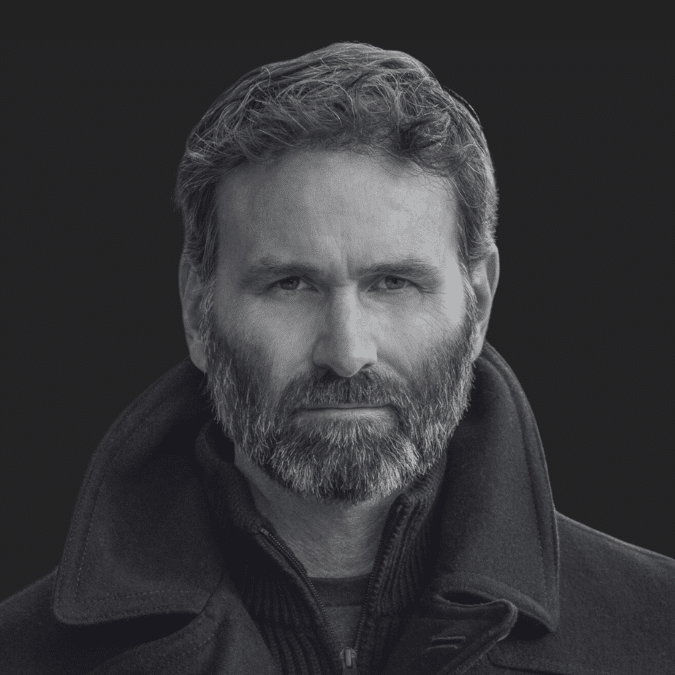
Jack Carr is a former Navy SEAL who led special operations teams as a Team Leader, Platoon Commander, Troop Commander, and Task Unit Commander. During his twenty years in Naval Special Warfare, he transitioned from an enlisted SEAL sniper to a junior officer leading counterinsurgency operations, and ultimately to commanding a Special Operations Task Unit in southern Iraq. He is a #1 New York Times bestselling author whose debut novel, The Terminal List, was adapted into the hit Amazon Prime Video series. Carr has since continued the James Reece series with multiple bestselling titles and is now co-author of his latest thriller, The Fourth Option, releasing in May 2026.
Connect with Jack